
 0
0
 0
0
What is an India medical device manufacturing license and why does it matter?
Planning to make medical devices in India is a smart move. The healthcare sector is growing fast, both in public and private hospitals, and demand for quality devices is rising every year. To tap this growth safely and legally, you need an india medical device manufacturing license issued under the CDSCO rules.
This licence is more than a legal formality. It shows that your plant, processes, and products meet India’s strict safety and quality standards. For Indian investors and global partners, it is a strong signal that your company is serious, compliant, and ready for long-term growth.
In this guide, you will learn the benefits of the licence, key documents you must prepare, the step-by-step process, and practical tips to avoid delays and queries.
Key benefits of getting the licence
Securing an india medical device manufacturing license brings several important advantages that go far beyond simple approval. Here are the main benefits for investors and promoters.
- Legal compliance: You operate within India’s regulatory framework and follow the Medical Device Rules. This protects you from legal issues and gives peace of mind.
- Market access: With a valid licence, you can sell your devices across India and, in many cases, use it as a base to export to other countries.
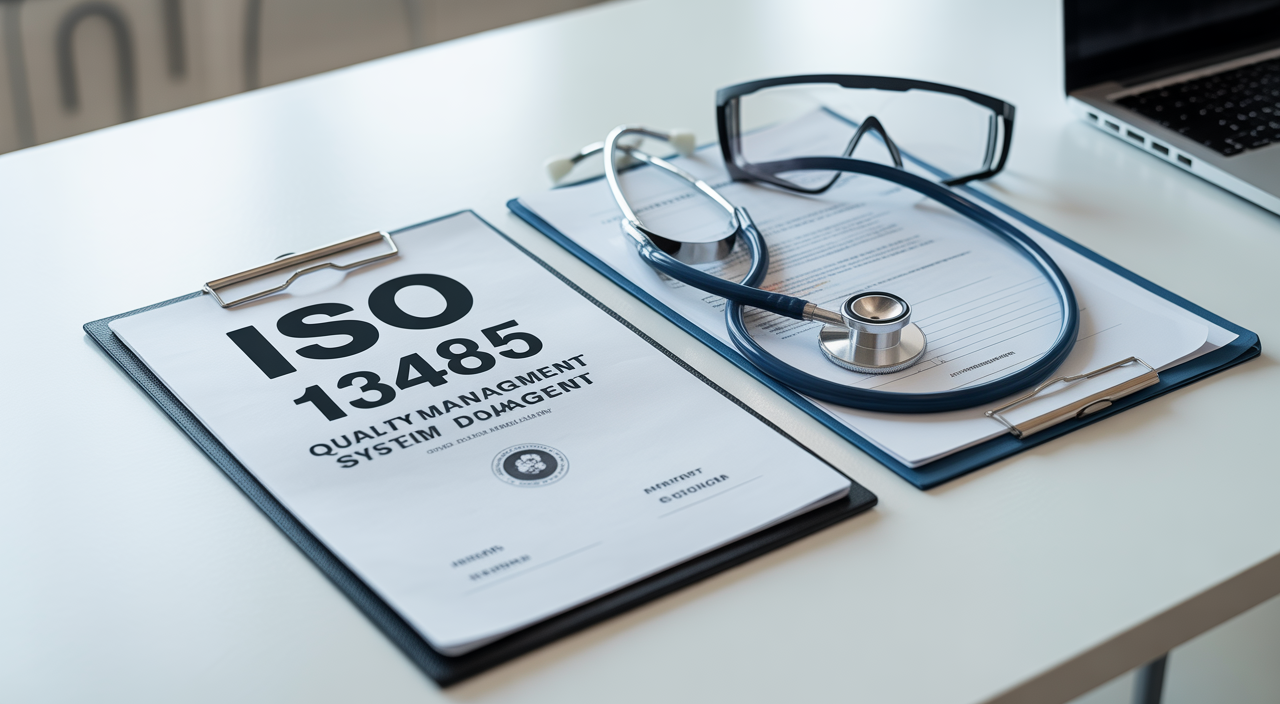
- Quality assurance: The process encourages you to adopt strong systems like ISO 13485 for quality management and ISO 14971 for risk management.
- Competitive edge: A licensed facility stands out when you bid for government tenders, approach hospitals, or pitch to international buyers.
Documents and prerequisites you must prepare
Being well prepared on paperwork is the easiest way to speed up your application. Below are the common documents usually required by CDSCO for a medical device manufacturing licence.
- Company incorporation certificate: Proof that your company is legally registered in India.
- Manufacturing site layout and plant report: Clear layout drawings and a brief on utilities, HVAC, clean rooms, and other key areas.
- Quality Management System certificate (ISO 13485): Shows that your production follows globally accepted quality standards.
- Risk management report (ISO 14971): Explains how you identify, evaluate, and control risks related to your device.
- Device technical file and labelling: Includes device description, design details, intended use, instructions for use, and artwork of labels and packaging.
- List of equipment and calibration records: All critical machines and instruments used for manufacturing and testing, along with calibration proofs.
- Authorized Indian Representative (AIR) details: Required when the legal manufacturer is outside India.
- Drug Wholesale Licence (Form 20B/21B or 20BB/21BB): Needed for the AIR in case of foreign manufacturers.
For comparison, if you are reviewing the broader healthcare space, you may also want to study how specialists such as orthopedic surgeons and other clinicians work with medical technology in daily practice.
How long is the CDSCO licence valid?
One of the biggest advantages for investors is that CDSCO manufacturing licences are generally perpetual. This means you do not need to reapply from scratch every few years.
However, there is an important condition. You must pay a retention fee every five years. If you forget or delay these payments, the authority may suspend or even cancel the licence, so it is wise to set reminders well in advance.
Step-by-step process to get your licence
The india medical device manufacturing license process is structured and logical. When you follow each step carefully, the journey becomes smooth and predictable.
Step 1: Classify your device correctly
Start by checking where your product fits under CDSCO’s risk-based system. Devices are classified as Class A, B, C, or D based on risk level, from low to high. Always use language like “generally notified as Class B” instead of making hard claims, unless clearly confirmed by official lists.
Step 2: Prepare the right application form
Once you know the device class, select the suitable form.
- Class A and B manufacturing licence: Apply in Form MD-3 and the licence is usually granted in Form MD-5.
- Class C and D manufacturing licence: Apply in Form MD-7 and the licence is generally issued in Form MD-9.
- Import licence (if relevant): Application is filed via Form MD-14, and the grant comes in Form MD-15.
Double-check that each section in the form matches the attached documents and that names, addresses, and device details are consistent.
Step 3: Submit on the CDSCO online portal
All applications are now handled through the CDSCO online portal. Create your login, fill the forms, upload documents in the correct format, and pay the official fees online.
Do not club multiple documents into a single PDF without clear bookmarks or labels. Separate, well-named files help regulators review your application quickly.
Step 4: Site inspection and queries
For most new facilities, CDSCO officials or state inspectors will visit the manufacturing site. They check cleanliness, equipment, documentation, validation reports, and staff training records.
The usual total timeline is around 3 to 6 months, but it may vary with device class and the number of queries. Respond to all questions politely and provide clear, point-wise replies with supporting documents.
Step 5: Licence grant and post-approval duties
Once the authority is satisfied, you receive a digital licence certificate. Keep this safely, and also display a copy at the manufacturing site.
After approval, your focus should shift to ongoing compliance. Maintain batch records, handle complaints, report serious adverse events, and keep your ISO and calibration certificates up to date.
Common mistakes that slow down approval
Even strong projects can face delays if a few basics are missed. Here are frequent errors you should avoid:
- Using fixed statements about device class instead of referring to CDSCO’s notified lists.
- Over-promising unrealistic timelines to investors when actual approvals can stretch beyond 6 months.
- Forgetting to attach the AIR’s Drug Wholesale Licence in foreign manufacturer cases.
- Submitting mixed or poorly labelled documents that confuse reviewers.
- Ignoring references to key ISO and IEC standards such as IEC 60601 (electrical safety) or IEC 62304 (software lifecycle) where relevant.
What if you skip the licence?
Working without a valid licence is never worth the risk. It can lead to suspension of operations, legal notices, and inability to participate in tenders or tie-ups with reputed hospitals.
More importantly, it can damage your brand image in a sector that depends heavily on trust and patient safety. As an investor, protecting your reputation is just as important as protecting your margins.
Estimated costs to budget for
Costs vary based on device type, consultant support, and the scale of your facility, but you can use these broad numbers for planning.
- CDSCO official fees: Around ₹15,000 to ₹25,000.
- Site inspection and related charges: Roughly ₹10,000 to ₹20,000.
- Consultant or service fees: Often between ₹50,000 and ₹1,00,000 depending on scope.
- Miscellaneous costs: Another ₹5,000 to ₹10,000 for certificates, notary, courier, and similar expenses.
Planning your budget carefully at the start makes cash flow smoother and reassures co-investors that there will be no surprises.
Professional support and strategic value
Many Indian and overseas investors choose to work with specialist service providers for gap analysis, QMS implementation, and liaison with CDSCO. This allows your core team to focus on product design, marketing, and building hospital relationships.
When combined with good market research and strong branding, a compliant manufacturing licence can support premium pricing and long-term partnerships, similar to how other high-trust sectors use regulation to their advantage. For instance, you can explore how patient-focused healthcare services build loyalty through compliance and support programs.
Conclusion
Obtaining an India medical device manufacturing license is a clear, step-based process that rewards careful preparation. Start with correct device classification, strengthen your plant and QMS, gather all documents, and submit a clean, well-structured file on the CDSCO portal.
For investors, this licence is not just a regulatory box to tick. It is a core asset that opens doors to hospitals, export markets, and long-term growth in one of the world’s most promising healthcare economies.
FAQs
1. How long does it usually take to get an India medical device manufacturing licence?
The typical time is around 3 to 6 months from complete submission, depending on device class, quality of documents, and how quickly you respond to queries from CDSCO.
2. Is the CDSCO manufacturing licence really perpetual?
Yes, the licence is considered perpetual, but you must pay the prescribed retention fee every five years. If you miss this payment, the licence can be suspended or cancelled.
3. Do foreign manufacturers always need an Authorized Indian Representative?
Yes, if the legal manufacturer is based outside India, an Authorized Indian Representative with a valid Drug Wholesale Licence (Form 20B/21B or 20BB/21BB) is mandatory.
4. Which main ISO standards apply to medical device manufacturing in India?
The most important are ISO 13485 for quality management systems and ISO 14971 for risk management. Depending on your device, additional standards such as IEC 60601 for electrical safety or IEC 62304 for software may also apply.
5. What overall budget should a new investor plan for licence-related expenses?
A realistic range is about ₹80,000 to ₹1,55,000, covering official CDSCO fees, inspection-related costs, consultant support, and miscellaneous documentation expenses.


Hello, I Diwasu author of Drunken poets of Sarasota, Drunken Poets is composed of people who live in Sarasota and see potential in this city.