
 0
0
 0
0
Do you manage a heavy vehicle workshop? Are you always looking for ways to make your operations safer, faster, and more efficient? Maintaining large trucks, buses, or specialized equipment presents unique challenges. You need powerful tools that can handle immense weight while keeping your technicians safe.
For many years, the answer has been the mobile column lift. This innovative equipment changed how workshops approach heavy vehicle maintenance. It offered flexibility and power unmatched by older methods. But what if there’s a solution that takes these benefits to an even higher level? What if you could achieve not just lifting, but also precision positioning for the most complex jobs?
The Foundation of Modern Heavy Vehicle Maintenance
Servicing heavy vehicles is a demanding task. Mechanics face issues like massive weights, awkward access points, and the constant need for speed. Traditional methods often involve fixed pits or cumbersome jacks. These can be slow, less flexible, and sometimes even dangerous.
That’s where this lifting equipment stepped in. It offered a revolutionary way to handle heavy-duty vehicles. These lifts brought a new standard of safety and efficiency to the workshop floor. They became essential equipment for modern maintenance facilities around the world.
Understanding Mobile Column Lifts: The Industry Standard
What is a Mobile Column Lift?
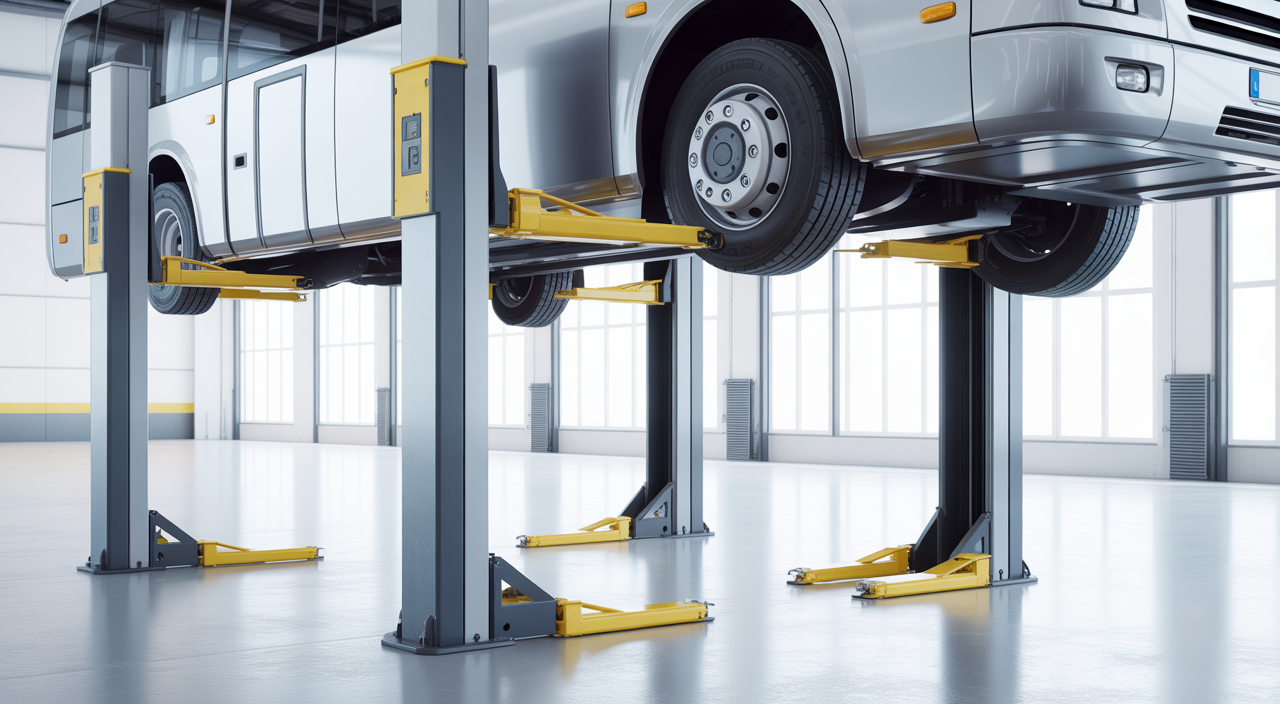
Simply put, a mobile column lift is a powerful, portable lifting device. It’s designed to lift heavy vehicles like trucks, buses, and construction equipment. These lifts come in sets, usually four or six columns. Each column has its own lifting mechanism. Technicians place these columns around the vehicle’s wheels. Then, they work together to raise the vehicle off the ground.
Most of these lifts use a strong hydraulic system or electromechanical drive. This power source allows them to lift many tons with ease. They are a game-changer for heavy-duty workshops.
Key Benefits of Traditional Heavy-Duty Lifts
These lifts offer many great advantages. They have truly transformed heavy vehicle maintenance. Here are some of the main benefits:
- Flexibility and Space Savings: Unlike fixed lifts, mobile columns can be moved. This means you don’t need dedicated bays. You can set up your lift wherever needed, freeing up valuable floor space.
- Increased Safety: They provide a stable and secure way to lift heavy vehicles. This reduces the risk of accidents compared to using multiple jacks and stands. Safety locks ensure the vehicle stays put once lifted.
- Improved Ergonomics: Technicians can raise vehicles to a comfortable working height. This reduces bending, stooping, and straining. It makes jobs easier and less physically demanding.
- High Capacity and Versatility: These lifts can handle a wide range of vehicle sizes and weights. From light commercial trucks to huge municipal buses or military vehicles, this equipment can often do the job.
Types & Features
This equipment comes with different features to suit various needs. You can choose between wired or wireless systems. Wireless lifts offer even more flexibility since there are no cables to trip over. They are often battery-powered. Capacities vary greatly, from lifts designed for smaller trucks to massive systems handling over 144,000 pounds. Advanced control systems and multiple safety locks are standard features.
Beyond the Lift: The Need for Precision Equipment Positioning
While these traditional lifts are excellent for simply lifting a vehicle, modern heavy vehicle maintenance is often more complex. Today’s vehicles have intricate systems and specialized components. These jobs demand more than just elevation. They require exact positioning.
The Limitations of Standard Lifting for Complex Jobs
Standard lifting equipment, while capable, can sometimes fall short for detailed tasks. Here are some common challenges:
- Limited Access Angles: Once a vehicle is lifted, technicians might struggle to reach certain components. Working in tight spaces can be difficult and time-consuming.
- Challenges with Component Work: Removing or installing heavy components like transmissions or engine parts requires extreme precision. Standard lifts don’t always offer the stability or multi-axis movement needed.
- Technician Strain: Awkward working positions can lead to fatigue and potential injuries. This is especially true during intricate tasks that require long periods in uncomfortable stances.
- Modern Vehicle Complexity: Servicing electric vehicle (EV) battery packs, for example, demands very specific positioning and handling. Traditional lifts may not be ideal for these advanced requirements.
Introducing the Meto Systems Mobile Equipment Positioner: The Next Evolution
This is where Meto Systems steps in with a groundbreaking solution. Our mobile equipment positioner offers capabilities that go beyond a basic lift. It doesn’t just raise vehicles; it allows for their precise manipulation. This makes complex maintenance tasks much easier and safer.
What is a Mobile Equipment Positioner?
Think of it this way: a traditional heavy-duty lift elevates the entire vehicle. A mobile equipment positioner also lifts, but it adds multi-axis control and enhanced stability. This allows you to tilt, rotate, and precisely position heavy equipment or components for intricate work. It’s built for those jobs where a fraction of an inch matters. For businesses looking to optimize their operations, learning about streamlining daily tasks is also crucial for overall efficiency.
Unmatched Advantages of the Meto Systems Positioner
The Meto Systems positioner brings a new level of sophistication to your workshop:
- Precision Control & Access: Our system offers fine-tuned adjustments. You can tilt, rotate, and move equipment exactly where it needs to be. This means better access to every part of the vehicle.
- Enhanced Safety: With superior stability and advanced safety features, the risk of accidents is greatly reduced. Technicians can work confidently, knowing their equipment is securely held. This focus on safety aligns with the benefits of improving operational practices.
- Maximized Efficiency: Precise positioning means less struggle and fewer re-dos. This leads to faster, more accurate repairs. Your vehicles get back in service sooner, saving you time and money.
- Unparalleled Versatility: This equipment handles not just lifting, but also maneuvering, tilting, and stabilizing. It’s perfect for complex component work, engine swaps, or servicing unique heavy machinery.
- Future-Proofing Your Workshop: As vehicles become more advanced, so must your tools. Our positioner is designed to meet the demands of emerging technologies. This includes specialized service for electric vehicle (EV) battery packs and complex powertrains.
Choosing Your Ideal Solution: Lift vs. Positioner
Deciding between a standard heavy-duty lift and a precision equipment positioner depends on your specific needs. Both are valuable tools, but they serve different primary functions.
Consider a traditional heavy-duty lift when:
- Your main need is to elevate vehicles for basic maintenance like tire changes, brake inspections, or routine undercarriage work.
- You require flexibility in your bay layout without the need for fixed installations.
- Your budget favors a more straightforward lifting solution.
Consider the Meto Systems Mobile Equipment Positioner when:
- Your workshop handles complex, detailed component work.
- You need extreme precision for tasks like engine removal, transmission installation, or intricate component access.
- Servicing advanced vehicle types, such as electric buses or specialized military vehicles, is a regular occurrence.
- You prioritize maximizing technician safety, ergonomics, and repair accuracy above basic lifting capabilities.
Think about your common repair types, workshop space, and future growth plans. These factors will guide you to the best investment.
Safety & Compliance: A Priority for All Heavy Lifting
Safety should always be the top priority in any heavy vehicle workshop. Regardless of the lifting equipment you choose, following strict safety protocols is crucial. Always train your technicians properly. Make sure they understand how to operate the equipment safely.
Familiarize yourself with industry safety standards. These standards help ensure equipment is designed, manufactured, and used safely. The Meto Systems positioner is engineered with these high safety standards in mind. Its design actively works to reduce risks and enhance technician well-being during operation.
Conclusion: Elevate Your Operation with the Right Tool
The evolution of heavy vehicle maintenance equipment is clear. We’ve moved from simple lifting to advanced, precision positioning. While such a lift is a fantastic tool for general elevation, the Meto Systems Mobile Equipment Positioner offers a leap forward. It provides unmatched control, safety, and efficiency for the most demanding tasks.
By choosing the right equipment, you can empower your technicians, enhance safety standards, and boost overall workshop productivity. It’s about investing in a future where precision and efficiency go hand-in-hand.
Ready to transform your heavy vehicle maintenance and elevate your workshop capabilities? Discover the advanced solutions from Meto Systems today. It’s time to experience the next level of heavy equipment care.
FAQs
Q1: How does a mobile equipment positioner differ from a standard mobile column lift?
A standard mobile column lift primarily lifts a vehicle vertically off the ground. A mobile equipment positioner, like the one from Meto Systems, offers multi-axis control. This means it can not only lift but also tilt, rotate, and precisely maneuver heavy equipment or components. This gives technicians much better access and stability for complex repair tasks, going beyond simple vertical elevation.
Q2: What types of vehicles can be serviced using a mobile equipment positioner?
The Meto Systems Mobile Equipment Positioner is designed for a wide range of heavy vehicles. This includes large trucks, buses, municipal vehicles, military equipment, and various specialized machinery. Its precision capabilities are especially beneficial for modern vehicles with intricate systems, such as electric vehicles (EVs) that require specific handling for battery packs, or heavy construction equipment needing detailed component work.


Hello, I Diwasu author of Drunken poets of Sarasota, Drunken Poets is composed of people who live in Sarasota and see potential in this city.